Have you ever captured an amazing moment outdoors, only to realize afterward that your footage doesn't look anything like you imagined? Maybe the camera angle was awkward, the subject moved out of frame, or you spent more time controlling the drone than enjoying the experience.
Choosing a drone with camera can solve many of these problems, but not every model is designed for the same type of user. From travel and hiking to cycling, family adventures, and content creation, the right features can make aerial filming much easier.
Why Is It So Difficult to Choose a Camera Drone?
With so many options available, shopping for a drone can quickly become confusing. Specifications such as camera resolution, flight time, tracking systems, stabilization, weight, and intelligent flight modes can make it difficult to understand what actually matters.
Too Much Focus on Specifications
It's easy to assume that a higher camera resolution automatically means better footage. While image quality matters, it isn't the only factor.
A camera that produces excellent video won't be very useful if the drone is difficult to control or cannot keep up with a moving subject. For many recreational users and creators, automated tracking and stable flight can be just as important as resolution.
Difficult Manual Control
Traditional drones often require practice before you can confidently control movement, altitude, and camera positioning simultaneously.
That learning curve can be frustrating when you're trying to record yourself hiking, running, cycling, or participating in another activity. A drone with automated flight features can reduce the amount of manual control required.
Bulky Equipment
Portability is another common issue. Large equipment can be inconvenient when you're travelling or already carrying hiking gear, cameras, or other essentials.
Compact camera drones are therefore becoming increasingly appealing to people who want aerial footage without carrying a large setup.
What Should You Look for in a Drone With Camera?
Before buying, consider how you actually plan to use the drone rather than simply choosing the model with the longest list of specifications.
1. Consider the Camera Quality
Resolution, stabilization, dynamic range, and frame-rate options all affect the final footage.
If you're primarily recording social media content, travel clips, or everyday adventures, you may not need professional cinema specifications. However, creators who plan to crop footage heavily or produce high-resolution content may benefit from more advanced cameras.
2. Look for Intelligent Tracking
If your main goal is to record yourself, tracking can be extremely useful.
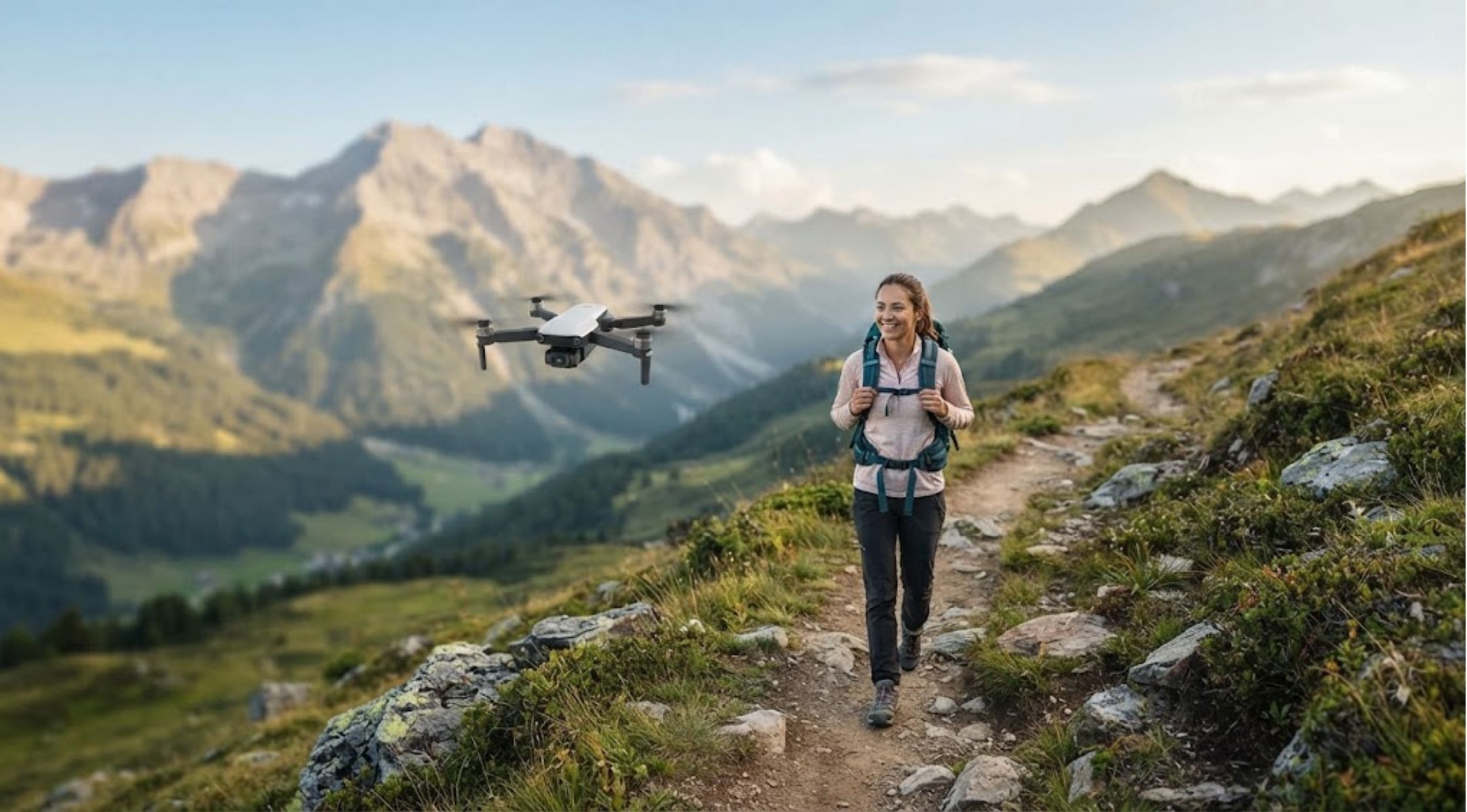
A drone that can recognize and follow a subject can capture movement without requiring another person to operate the controls. This is particularly useful for activities such as running, cycling, hiking, skiing, or travelling.
3. Check Portability
Think about where you'll take the drone. A compact model can be much easier to store in a backpack and carry during outdoor activities.
The smaller the setup, the more likely you are to actually bring it with you—and equipment that gets used regularly is generally more valuable than equipment that stays at home.
4. Pay Attention to Flight Modes
Automated flight modes can simplify the filming process. Features such as follow, orbit, hover, and predetermined flight paths allow you to focus more on the activity and less on manually positioning the aircraft.
How to Get Better Footage With Camera Drones
Buying the right equipment is only part of the process. A few simple habits can significantly improve your results.
Plan Your Shot
Before launching, think about what you want to capture. Consider the background, direction of movement, lighting, and distance from the subject.
Even an advanced drone can't completely compensate for poor composition.
Use Natural Movement
Smooth movements generally look more professional than sudden changes in direction. If your drone offers automated flight modes, experiment with them to create consistent movement.
Shoot During Better Lighting
Early morning and late afternoon often provide softer natural light than the middle of the day. Avoiding extremely harsh lighting can help create more balanced footage.
Keep Your Equipment Simple
When filming an outdoor activity, complicated equipment can become a distraction. A compact setup can make it easier to capture spontaneous moments without interrupting the experience.
When Is a Premium Drone Worth Considering?
A premium drone isn't necessarily the right choice for everyone. If you're simply learning how drones work, an entry-level model may be enough.
However, upgrading becomes more useful when you care about hands-free filming, subject tracking, portability, stabilization, and consistent footage.
This is where products from HOVERAir offer an interesting alternative to conventional drones. Rather than focusing exclusively on traditional remote-controlled flying, HOVERAir designs flying cameras around automated flight and hands-free capture.
The approach can be particularly useful for people who want to record themselves without asking someone else to operate the camera.
Benefits of Upgrading Your Camera Drone
Investing in a more capable model can change the overall filming experience.
Capture Yourself More Easily
Automated tracking can allow you to remain the focus of the shot while the drone handles much of the positioning.
This can be useful for solo travellers, athletes, outdoor enthusiasts, and social media creators.
Spend Less Time Controlling the Drone
The more automation a drone offers, the less attention you may need to devote to manual controls. That means you can concentrate on your surroundings and the activity you're actually doing.
Create More Consistent Footage
Intelligent flight modes can make repeated shots easier to reproduce. This can be valuable for creators who want consistent footage for YouTube, Instagram, TikTok, or personal travel videos.
Make Aerial Filming More Portable
Compact camera drones can fit more naturally into an everyday travel setup. Instead of treating aerial equipment as something reserved for special occasions, you can carry it on hikes, holidays, bike rides, or weekend adventures.
Is a HOVERAir Flying Camera Right for You?
For someone looking for a conventional drone with camera, traditional models may offer extensive manual controls and a familiar flying experience.
But if your priority is recording yourself while moving, a flying camera such as those offered by HOVERAir may be worth considering. Its approach places greater emphasis on autonomous flight, tracking, portability, and hands-free recording.
The HOVERAir X1, for example, is designed as a compact flying camera rather than simply a traditional drone. More advanced models in the range add features aimed at creators and action-oriented filming.
The important thing is to match the technology to your needs rather than paying for features you won't use.
Make Your Decision Based on How You Film
The best drone with camera isn't necessarily the one with the most impressive specification sheet. It's the one that makes it easier to capture the footage you actually want.
If you're a photographer who enjoys manual control, a conventional camera drone may make sense. If you're a solo traveller, athlete, or content creator who wants hands-free footage, automated tracking and intelligent flight features may be more valuable.
Before purchasing, consider your typical activities, desired video quality, portability requirements, and how much manual control you're comfortable with.
For people who want a simpler way to capture themselves in motion, exploring the autonomous approach offered by HOVERAir can be a useful next step.
Ultimately, choosing the right equipment is about removing obstacles between you and the footage you want to create. When your drone is easy to carry, simple to operate, and capable of following the action, you can spend less time worrying about the camera—and more time creating memorable moments.