Ever started a DIY project only to realize halfway through that your drill is underpowered, your saw is awkward to handle, or you simply don't have the right tool for the job?
Choosing tools can be surprisingly difficult. There are different power ratings, battery sizes, speeds, accessories, motor types, and tool designs to compare. And while it can be tempting to choose the most powerful option available, more power isn't always the answer.
The better approach is to think about the projects you actually plan to complete and choose Power Tools that provide the right balance of performance, control, convenience, and versatility.
For many homeowners and DIY enthusiasts, Cordless Power Tools can make this process even easier by removing the need to work around a power cable.
Common Problems DIYers Face When Choosing Tools
Buying the wrong tool can turn a straightforward project into a frustrating afternoon.
You might encounter problems such as:
- A drill that struggles with tougher materials
- A saw that is too large or difficult to control
- Batteries that run out before the project is finished
- Too many accessories that you never actually use
- Tools that are uncomfortable during extended projects
- Buying several individual tools when a kit would be more practical
- Choosing a tool based on specifications rather than your actual needs
Another common mistake is buying tools before deciding what projects you are likely to tackle.
A homeowner who occasionally assembles furniture has very different requirements from someone regularly building shelves, renovating rooms, or working on larger woodworking projects.
Why the Right Tool Matters
Different jobs require different combinations of speed, torque, cutting capacity, control, and portability.
A drill might be ideal for creating holes and driving screws, while a circular saw is better suited to cutting materials. A sander can help prepare a surface for refinishing, but it isn't a substitute for either tool.
This sounds obvious, but it becomes easy to overlook when shopping online because product specifications can make every tool appear impressive.
Instead of asking, "Which tool has the highest power rating?" start with:
"What do I need this tool to do?"
That single question can make your buying decision much simpler.
How to Choose the Right Power Tools
1. Start With Your Most Common Projects
Make a list of the jobs you expect to complete during the next year.
If your projects mainly involve assembling furniture, hanging shelves, drilling holes, and making basic repairs, a quality drill driver may be one of your most useful purchases.
If you regularly work with wood, you may need a saw and sander as well. For renovation projects, additional tools such as paint sprayers, heat guns, or specialized cutting tools may become useful.
HYCHIKA organizes its current range around projects such as drilling and assembly, cutting wood and other materials, sanding and refinishing, and painting, making it easier to think about tools according to the job you're trying to complete.
2. Decide Between Corded and Cordless
One of the biggest decisions is whether you want corded or Cordless Power Tools.
Corded tools can be useful when you need continuous operation and have convenient access to an outlet. However, the cable can restrict movement and make outdoor or awkward-position projects more difficult.
Cordless models offer greater freedom of movement and can be particularly convenient for quick repairs, furniture assembly, and jobs around the house.
The trade-off is that you need to manage battery capacity and charging.
HYCHIKA currently offers both corded and cordless categories, including cordless drills, screwdrivers, and other tools, so shoppers can choose according to the demands of their projects.
3. Pay Attention to the Battery System
If you choose Cordless Power Tools, don't look at the tool alone.
Check the battery voltage, capacity, charging requirements, and compatibility with other tools in the same system.
A shared battery platform can be particularly convenient because one battery system may support several compatible tools.
HYCHIKA's current battery and charger range includes options for selected 12V, 16.8V, and 18V/20V tools, while the company advises buyers to check their specific tool model when selecting replacement batteries and accessories.
4. Don't Ignore Ergonomics
Power is important, but comfort matters too.
A tool that feels heavy or awkward after five minutes can become frustrating during a longer project. Consider the grip, overall weight, balance, controls, and whether you can comfortably operate the tool in the positions your project requires.
For DIY users especially, a manageable tool can sometimes be more useful than an extremely powerful one.
When Premium Power Tools Are Worth Considering
You don't necessarily need professional-grade equipment for every household project.
However, investing in better-designed Power Tools can make sense when you use them frequently or expect to tackle more demanding work.
Look for practical features rather than impressive-sounding specifications. Brushless motors, adjustable speed settings, useful accessory kits, dust collection, LED work lights, and comfortable designs can all make certain jobs easier, depending on the tool.
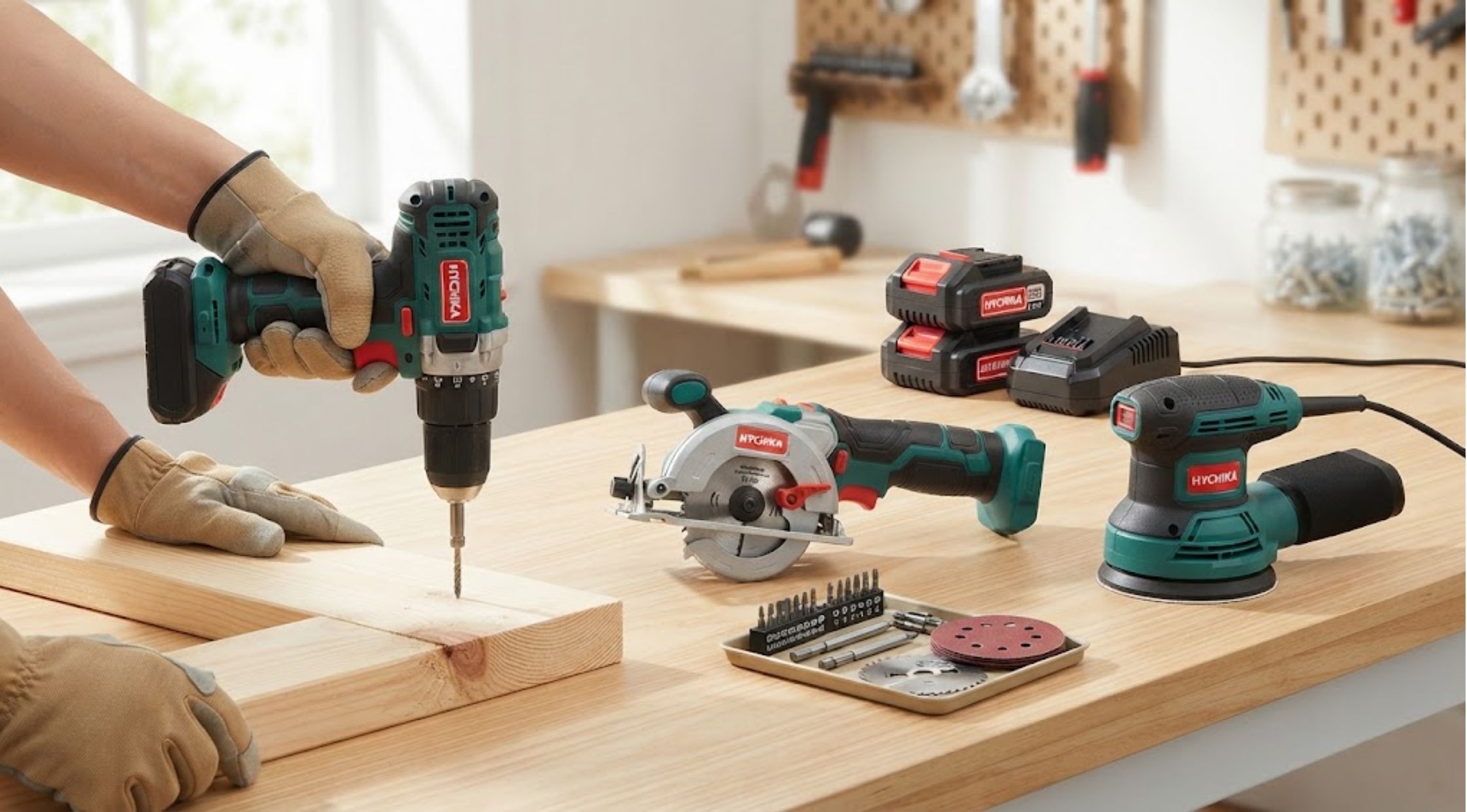
HYCHIKA's current collection includes brushless cordless drill drivers, mini circular saws, electric sanders with dust collectors, screwdrivers, impact tools, and other equipment across different project categories.
Benefits of Upgrading Your Tool Collection
Greater Convenience
The right tool can reduce the amount of manual effort required for repetitive jobs. A cordless drill, for example, can make assembling furniture or installing shelves much quicker than relying entirely on a manual screwdriver.
Better Project Flexibility
Having a small collection of versatile tools means you're prepared for more types of DIY work without constantly borrowing or purchasing equipment.
Less Workspace Restriction
Cordless Power Tools are particularly useful when you're working outdoors, moving between rooms, or operating somewhere without convenient access to an electrical outlet.
A More Organized Workshop
Instead of buying tools randomly as projects arise, you can build your collection around a few core categories.
A drill driver, saw, sander, and appropriate accessories can provide a useful starting point for many home improvement projects. From there, you can add specialized equipment only when a particular project requires it.
Better Long-Term Value
The cheapest tool isn't always the best long-term value.
If a tool is uncomfortable, unsuitable for your projects, or lacks the features you need, you may end up replacing it. Spending a little more on a well-suited tool can make more sense when you expect to use it regularly.
Final Thoughts
Choosing Power Tools doesn't have to be complicated.
Start with your projects, identify the tasks you do most often, then compare tools based on the features that matter for those jobs.
If portability and freedom of movement are priorities, Cordless Power Tools can be a practical choice. Just remember to consider battery compatibility and charging alongside the tool itself.
For DIYers looking for a broad selection, HYCHIKA offers tools across drilling, cutting, sanding, painting, renovation, and other home-improvement categories. Its current range also includes cordless drill drivers, circular saws, sanders, screwdrivers, and compatible batteries and accessories.
The goal isn't to own the biggest collection of tools. It's to have the right tools for the work you actually do.
Choose carefully, prioritize comfort and compatibility, and invest in quality where you'll use a tool regularly. With the right setup, your next DIY project can feel less like a struggle and more like something you genuinely enjoy doing.