Have you ever experienced a power outage just when you needed to charge your phone, finish some work, or keep essential devices running? Or perhaps you've planned a camping trip only to realise that your electronics, lights, and other equipment need a reliable source of electricity. These situations highlight how useful portable power can be when traditional outlets aren't available.
A Portable Power Station offers a convenient way to power compatible devices at home, outdoors, or while travelling. When paired with solar panels, it can also become a flexible recharging solution for off-grid adventures. However, with different battery capacities, output ratings, and charging options available, choosing the right model can feel confusing.
Understanding your power requirements is the first step toward finding a solution that delivers practical value without overspending.
Why Is Reliable Portable Power So Important?
Electricity is part of almost every aspect of modern life. We rely on phones for communication, laptops for work, lights for visibility, and various appliances for everyday convenience. When access to a wall outlet disappears, even simple tasks can become difficult.
Unexpected Power Outages
A power cut can interrupt remote work, leave devices uncharged, and make it harder to maintain communication. A suitable backup power source can help keep essential electronics operating during shorter interruptions.
However, not every power station can operate high-demand appliances. Refrigerators, heaters, kettles, and air conditioners may require substantially more power than phones or laptops.
Limited Electricity During Outdoor Trips
Camping, road trips, and outdoor events often take you away from conventional power sources. Carrying enough battery-powered equipment for every situation can be inconvenient, especially when multiple devices need charging.
Dependence on Traditional Charging
Power banks work well for smaller electronics, but they may not provide the capacity or output needed for several devices or equipment with higher power requirements. Choosing a solution that matches your needs can reduce the frustration of running out of electricity at the wrong time.
How Does a Portable Power Station Work?
A Portable Power Station is essentially a rechargeable battery system with built-in power outputs. Depending on its design, it may provide AC outlets, USB ports, and DC connections for compatible electronics and appliances.
You charge the internal battery from a wall outlet, a vehicle connection, or a compatible solar panel. The stored energy can then power connected devices without requiring a direct connection to the electricity grid.
Battery capacity is commonly measured in watt-hours (Wh), while output power is measured in watts (W). These figures describe different things: capacity indicates how much energy is stored, whereas output indicates how much power the station can deliver at a given moment.
Understanding both is essential when comparing models.
How to Choose the Right Power Station for Your Needs
Before buying, consider where you'll use the unit and which devices you want to operate.
1. Calculate Your Power Requirements
Make a list of the devices you want to power and check their wattage labels or manufacturer specifications.
For example, a 60W laptop running for three hours uses approximately 180Wh of energy under ideal conditions. In practice, the power station needs additional capacity because conversion losses and standby consumption reduce the usable energy.
For multiple devices, add their expected energy consumption together and allow a reasonable margin.
2. Check Battery Capacity and Output
A higher-capacity unit generally stores more energy, but it may also be heavier and more expensive.
If you mainly charge phones, cameras, and laptops, a compact model may be sufficient. If you want to run several devices for longer periods, a larger battery may make more sense.
Also check continuous output and surge capacity. Some appliances require a brief burst of extra power when starting, so the station must support those demands.
3. Consider Portability
Think about how often you'll transport the equipment. Campers and travellers may prioritise a lightweight design with convenient handles, while a home backup setup can accommodate a larger unit.
Check the dimensions and weight before purchasing, especially if you plan to carry the station between campsites or store it in a vehicle.
4. Compare Charging Options
Charging flexibility can make a substantial difference. Many models support wall charging, while some also support vehicle charging and compatible solar panels.
If you regularly spend time outdoors, solar compatibility may be particularly useful. Check the supported solar input, connector requirements, and recommended panel specifications before buying accessories.
When Is a Solar Generator Worth Considering?
A Solar Generator typically combines a battery-based power station with solar panels or the ability to recharge from them. Unlike a traditional fuel generator, a battery-based solar setup doesn't burn fuel while supplying stored electricity.
This makes it appealing for camping, outdoor work, and certain backup-power situations. It can also provide a way to replenish stored energy when sunlight is available.
However, solar charging depends on panel output, weather, sunlight exposure, and the station's input limits. Cloudy conditions, shade, and shorter daylight hours can increase charging time. A solar setup also doesn't automatically provide unlimited power: energy use must remain within the battery's capacity and the system's charging capabilities.
For the best results, estimate your daily energy consumption and compare it with realistic solar charging expectations.
Is a Premium Power Station a Smart Investment?
A basic unit may work well for occasional phone charging, but frequent travellers or households seeking more versatile backup power may benefit from a more capable model.
Depending on the product, useful upgrades can include higher battery capacity, greater output, faster charging, additional ports, and support for compatible solar panels. Expandable battery systems may also offer flexibility for users whose energy requirements could increase later.
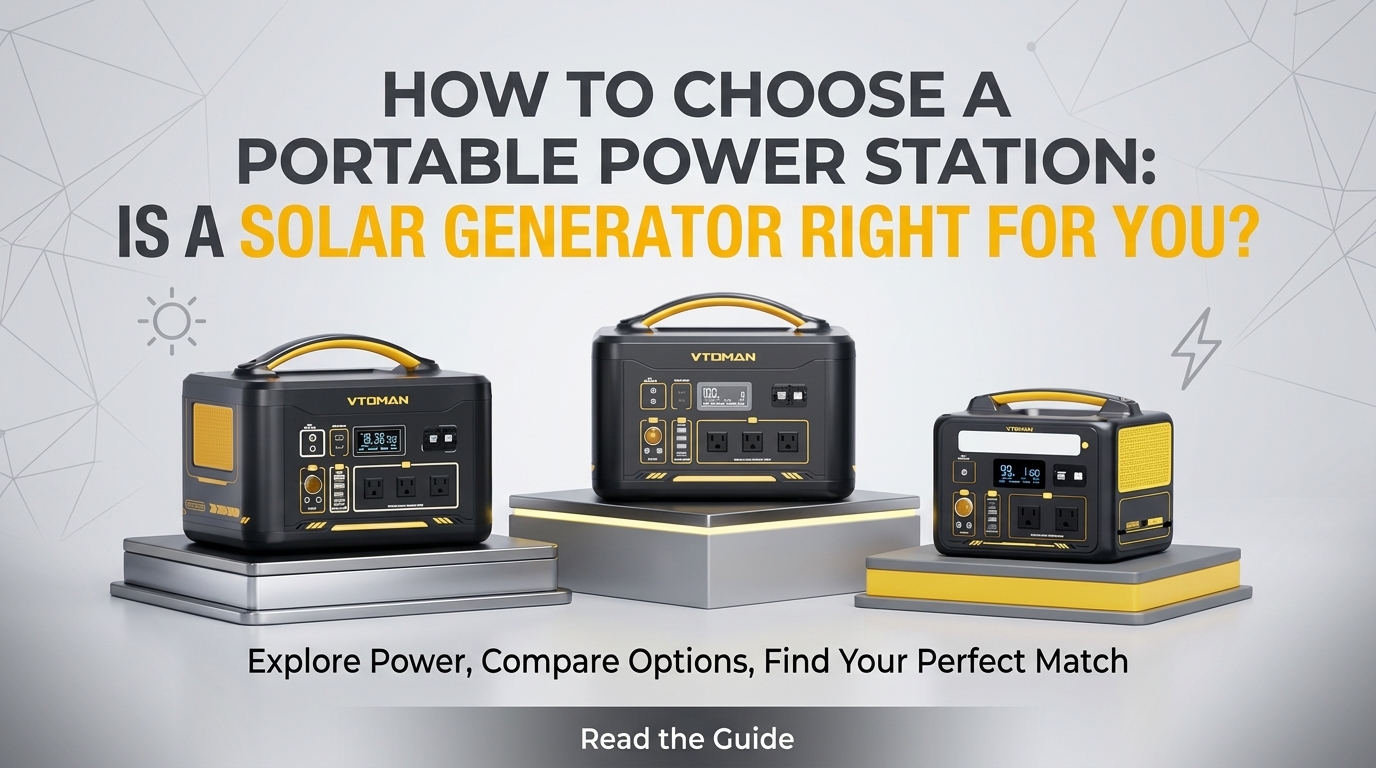
VTOMAN is one brand worth considering when comparing portable power solutions. Its range includes power stations designed for different capacity requirements and charging needs, making it possible to compare options for camping, travel, and selected backup applications.
When evaluating a VTOMAN model, look beyond the advertised capacity. Review its continuous output, supported appliances, charging speed, solar input limits, battery specifications, and available safety protections. A premium product is worthwhile when its capabilities solve a real problem in your routine.
Common Mistakes to Avoid Before Buying
Even a well-reviewed Portable Power Station can disappoint if it doesn't match your requirements.
Ignoring appliance wattage: Check both running power and starting surges for equipment with motors or compressors.
Buying too little capacity: Allow for conversion losses and the number of hours you need to operate each device.
Assuming solar charging is instant: Panel performance changes with weather, sunlight, orientation, and shading.
Overlooking compatibility: Confirm that plugs, voltage, connectors, and charging inputs match your equipment.
Forgetting long-term needs: Consider warranty coverage, battery care instructions, and the availability of compatible accessories.
VTOMAN's product specifications can help you compare suitable configurations, but always verify the requirements of your particular appliances before choosing a system.
Find a Portable Power Solution That Fits Your Lifestyle
Reliable portable electricity can make power interruptions less disruptive and outdoor adventures more convenient. The right choice starts with understanding which devices you need to operate, how long they must run, and whether you'll have access to wall charging or sunlight.
A Portable Power Station can be a practical option for everyday electronics and selected backup needs, while a Solar Generator setup may offer greater flexibility when recharging away from the grid.
Compare capacity, output, portability, and charging options before making your decision. Explore available solutions from VTOMAN alongside other suitable models, and choose a system that fits your actual energy needs rather than simply buying the largest or most expensive unit.