Do you find yourself avoiding longer walks because you are worried about losing your balance, getting tired, or simply not having somewhere to rest?
For many people, everyday activities such as shopping, walking around the neighborhood, or moving around the house can become more challenging when mobility changes. The good news is that the right support does not have to mean giving up independence. The right Rollator Walker or other Mobility Aids can make everyday movement feel more manageable while allowing you to stay active and involved in the things you enjoy.
The challenge is knowing which option actually fits your needs.
Common Mobility Problems That Make Daily Activities Harder
Mobility challenges are not always the same from one person to another.
Some people mainly need additional balance and stability while walking. Others can walk independently but become tired after a short distance. Some may need somewhere to sit and rest during longer outings, while others need a mobility solution that can easily be transported in a car.
A common mistake is choosing a mobility product based only on appearance or price.
A lightweight walker might be convenient indoors but less suitable for rough outdoor surfaces. Similarly, a large mobility device may provide additional support but be difficult to store or transport.
The goal is not to find the biggest or most advanced product. It is to find the Mobility Aids that solve your particular everyday problem.
Why Choosing the Right Support Can Be Difficult
One reason shopping for mobility equipment can feel overwhelming is the wide range of options available.
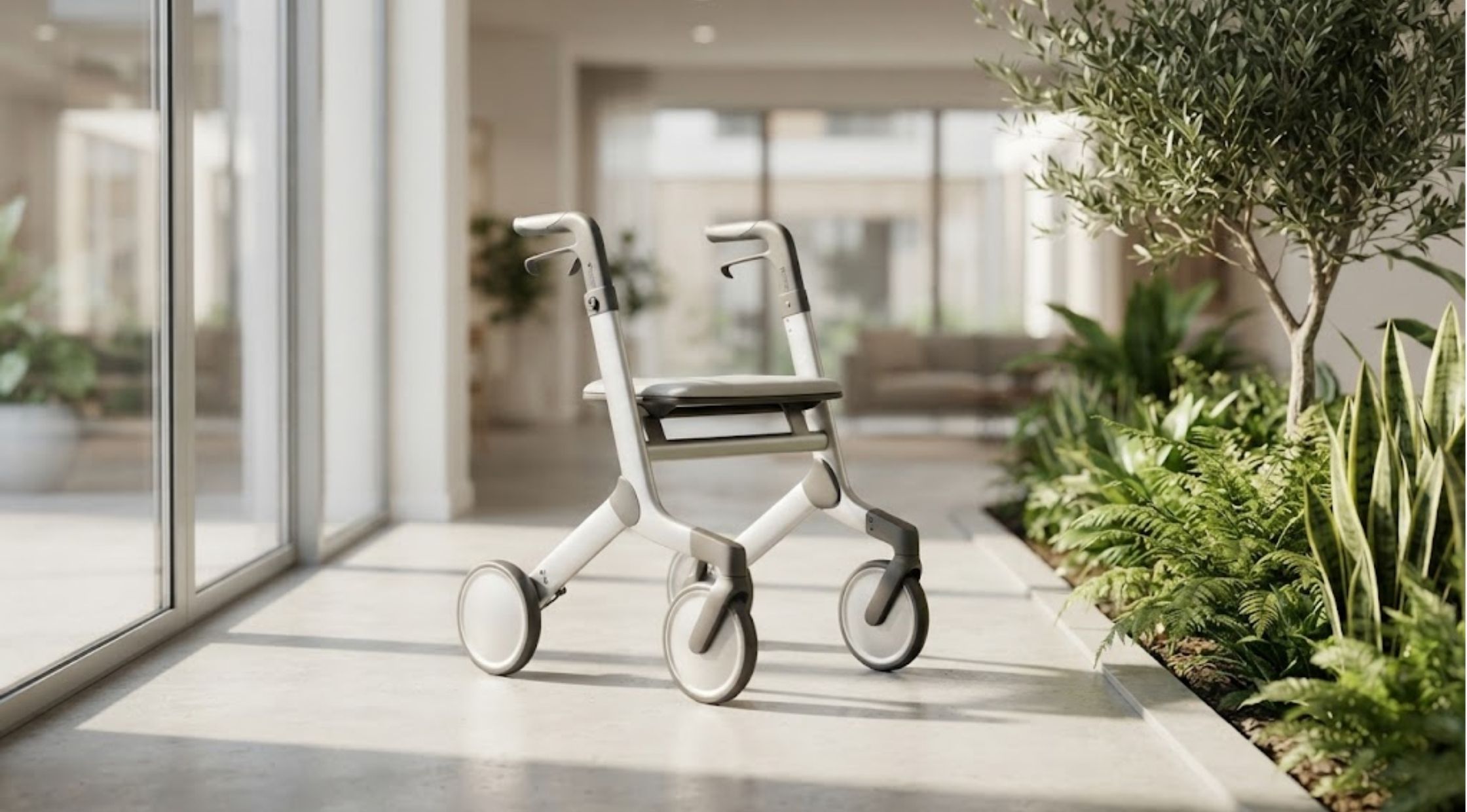
A traditional walker, for example, may provide strong support but generally needs to be lifted as you move. A Rollator Walker, by contrast, has wheels that allow it to move continuously with you. Some rollators also include seats, storage, adjustable handles, or larger wheels for outdoor use.
Your environment also matters.
Someone primarily moving around a home may need a compact design that is easy to maneuver through doorways. Someone who regularly walks outdoors may benefit from larger wheels and a stronger frame.
The right choice therefore depends on your mobility level, surroundings, daily routine, and comfort requirements.
How to Choose a Rollator Walker That Fits Your Lifestyle
1. Think About Where You Will Use It
Start by considering your most common environment.
For indoor use, look for a design that is easy to maneuver and does not feel unnecessarily bulky. For outdoor use, larger wheels and a more robust construction can be useful when dealing with sidewalks, gravel, grass, or uneven surfaces.
VOCIC's current rollator range includes lightweight foldable models as well as options designed around outdoor use and larger wheels, giving shoppers different configurations to consider.
2. Consider Whether You Need a Seat
If fatigue is one of your biggest concerns, a rollator with a seat can provide a convenient place to take a break.
This can be particularly useful during shopping trips, outdoor walks, or other activities where you may not always find a suitable place to sit.
However, make sure the seat is comfortable and that the overall design remains easy for you to control. A seat should add convenience without making the device unnecessarily difficult to maneuver.
3. Check Handle Height and Adjustability
Comfort starts with positioning.
Handles that are too high or too low can make walking uncomfortable and may affect how naturally you move. Adjustable handles allow you to find a more suitable position.
Look for a design that allows the handles to be adjusted easily and securely. VOCIC, for example, offers rollators with adjustable handle configurations, including its lightweight models.
4. Pay Attention to Weight and Portability
If you frequently travel by car, weight can become a major consideration.
A rollator that folds easily can be much more convenient to store or transport. Lightweight designs can also make handling the equipment easier.
VOCIC's Z35 PackGo, for example, is positioned as a foldable lightweight rollator with one-touch folding and a compact folded design.
5. Don't Ignore the Brakes
Braking is an important part of choosing a rolling mobility device.
Make sure you understand how the brakes operate and that you can comfortably squeeze or activate them. If the rollator includes a seat, you should also understand how the parking mechanism works before sitting down.
If possible, practice operating the brakes before relying on the device for longer outings.
When Premium Mobility Aids Make Sense
Once you understand your requirements, it becomes easier to see why paying attention to quality and design can be worthwhile.
Premium Mobility Aids are often designed with several everyday considerations in mind rather than focusing on just one feature. That can include portability, adjustability, storage, seating, wheel design, and ease of use.
VOCIC offers a broad selection that extends beyond rollators to include wheelchairs, mobility scooters, patient lifts, and other care products. This can be useful if your mobility needs change over time and you want to compare different levels of support in one place.
The aim is not necessarily to choose the most expensive solution. It is to choose equipment that provides useful features without creating new frustrations.
The Benefits of Upgrading to Better Mobility Equipment
A thoughtfully designed Rollator Walker can do more than simply provide physical support.
It can make it easier to participate in everyday activities. A seat can make longer outings feel more manageable. A foldable frame can simplify transportation. Adjustable handles can improve comfort, while larger wheels may make outdoor movement easier.
For people who still want to walk but need additional support, the right rollator can help make movement feel more practical.
And if a rollator is no longer enough, having access to other Mobility Aids can make it easier to consider a different solution rather than simply reducing your activities.
VOCIC's current range reflects this progression, with products spanning walking-focused rollators through wheelchairs and mobility scooters.
Make Your Decision Based on Your Real-Life Needs
Choosing mobility equipment should begin with a simple question: What is currently making everyday movement difficult?
If balance is the main concern, prioritize stability and control. If fatigue limits your outings, consider a rollator with a comfortable seat. If transportation is important, focus on lightweight and foldable designs. If outdoor terrain is the challenge, look for larger wheels and an appropriate frame.
Do not choose based solely on what looks impressive.
The best Rollator Walker is the one that fits your routine, feels manageable to operate, and provides the level of support you actually need.
Likewise, the right Mobility Aids should help solve a practical problem without unnecessarily limiting your independence.
With thoughtful comparison, you can find equipment that supports your lifestyle rather than forcing your lifestyle to adapt around the equipment. Whether you are taking a short walk, running errands, or simply moving around your home, the right mobility solution can make everyday activities feel more accessible and comfortable.